
Tilting At Windmills #5
A gnostic or agnostic, I originally sat down to write a semi-cheeky, rigid-forked revelation related to Cy Whitling’s Freehub piece about suspension-tuning semi-cultism. After all, what more honest interaction can one have with the trail than suffering stoically down technical terrain on their double-hardtail?
Not that I’m disagreeing with mountain-bike-media’s triple-plus threat*, it’s just that I really do know the one universal secret of mountain bike suspension performance upgrades. I have seen firsthand the singular truth behind the simply aMaZiNg results of almost every custom valving retune, bushing burnishing, million-dollar-magic-sauce lube job, air-piston resizing, damper upgrade, super-seals stiction exorcism, plushness prayer session, or other VISA-powered indulgence.
And, guess what? I’m willing to share it. Free of charge, even. No membership required. First, we should have some refreshments; Kool-Aid, anyone?
*{He can write! He can draw! He can present! He can ride! He can dance!?! He can sing?!?}

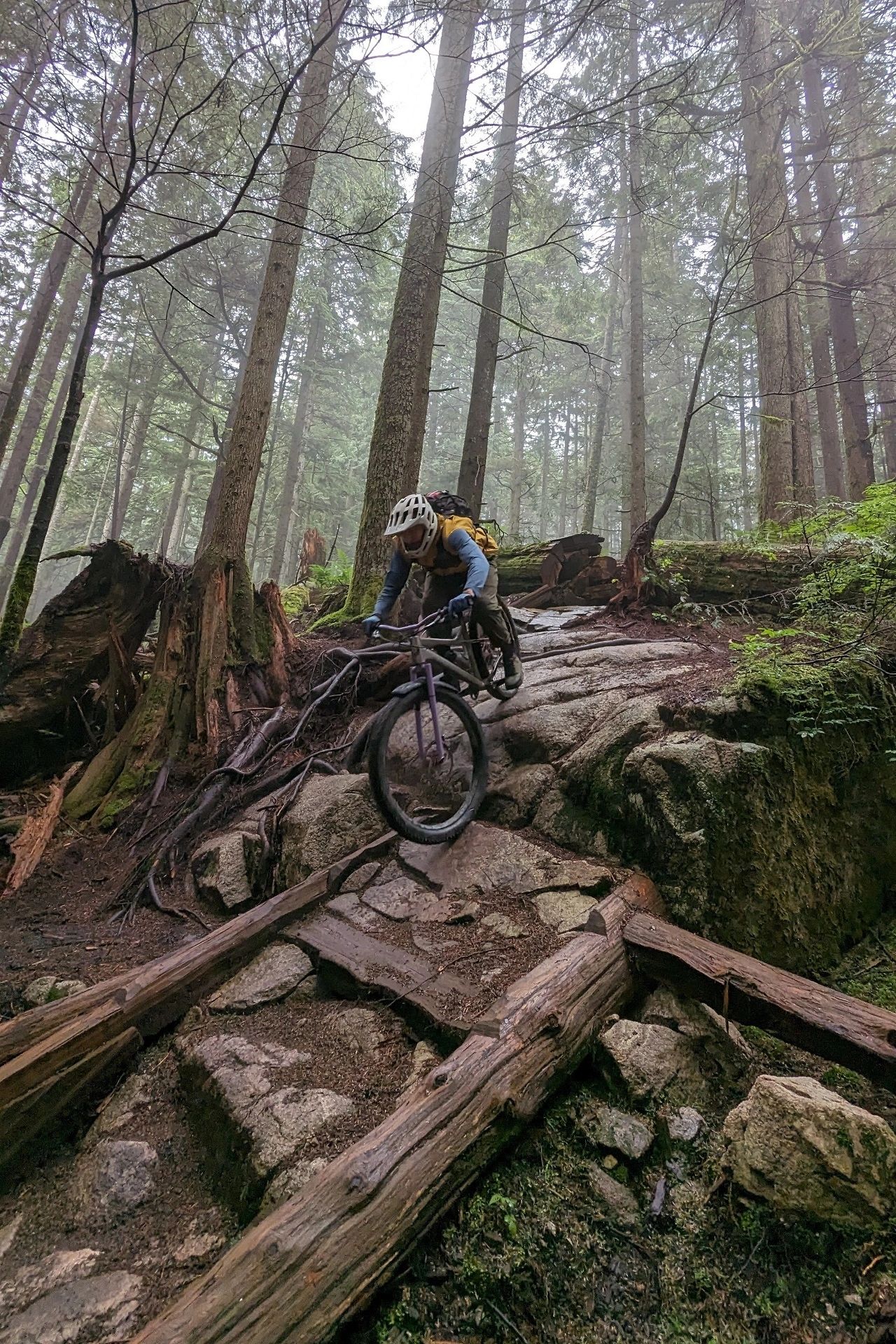
{Photo: JacAttack}
[Aside]
Tilting at Windmills was my second-favourite feature, after CONFLICT!, during my very brief time writing under Cy at BikeMag. I’ve decided to take it up again here at MEATengines. Here are links to the first four, BikeMag, pieces:
- Mountain Bike Sizing
- Shimano XT and the Chevrolet Corvette
- CUES Pews and the Battery Blues
- Lock-On Vs. Push-On Grips

{Artwork: Cy Whitling}
[/Aside]
De-enshitification
I’ll say, up front, that I have felt the subtle suspension-upgrade magic that can happen. Especially for the lighter-weight and heavier-weight riders at the extremes of the factory setting bell curve. I’ve been witness, first-hand, to many an appreciated modification by the Pope of Plushness*.
However, when we’re talking about a fully factory-refreshed fork or shock, working its stock best and running the proper spring rate, with bracketed settings. Well, these mods are typically subtle ameliorations, not awesome spectacles of suspension splendor. Can they result in seconds saved on a race track, stoke a smile, reduce fatigue, or otherwise justify their cost? Absolutely. Will they move you forward a spot on your regular group ride? Sorry, no.
The issue, the secret, is that the vast majority of before-and-after reviews of aftermarket suspension ‘magic’ don’t start from a position of factory-freshness. They are upgrades, yes, real upgrades, on top of long-overdue services of absolutely enshitified suspension products. Of course, your shocks feel way better when they don’t suck anymore!
Trap-door high-stiction suspension fork action. Blown shocks with zero damper support. Hydro-locking forks with half their bath oil rammed into the air system. Desiccated hydrodynamic bushings; knocking and binding in compression and rebound. Busted or corroded shims. Cooked oil. Binding seal heads. Bin-ready bumpers. Ye olde ‘buy once, cry once’ doesn’t apply to products that require routine service to work properly.
Example? A Vorsprung Luftkappe added on to an air fork that’s already working its level best? Yes, definitely worth considering for someone seeking a softer initial action with more support through the fork’s stroke. A Vorsprung Luftkappe and a full rebuild on an enshitified fork that hasn’t been serviced in two years? A mind-blowing difference!
*{AKA James @ SuspensionWerx. Full disclosure: my friend and previous employer.}

{Photo: MEATengines}
I’ll note here that enshitification isn’t just a result of hours collected on the chassis. Bikes are being sold new today with forks that were built three, maybe more, years ago. And over those years, the seals and bushings have been dry, as whatever oil is in the fork slowly pools in the lowers. Even a basic service with some fresh lube in the right place can make those awful-feeling “fresh” forks sing. No upgrades needed.
I don’t regularly work in a shop these days, and I still come across ‘new’ rigs with sucking shock dampers and sticky fork action. Zero chance those bikes, whether they’re 4K or 14K+, are going to be possible to set up properly.
Heck, I’d go as far as to put a fresh-from-service budget-friendlier-performance fork {SR Suntour RC+, Fox Rhythm, RockShox Select} up against any super-boutique option that hasn’t been serviced in six months. Whether that’s six months of riding, or six months of sitting.


{Photos: MEATengines}
The Finer Print
And to reiterate, it’s not that premium suspension products or upgraded suspension products don’t have their place. I’m still stoked about my experience with the rad DVO Onyx 38 D1 SL. The Clairebarian’s excellent Cane Creek Helm has some tweaks to make it more grom-friendly. I’ve owned a couple of brilliant forks upgraded with PUSH and Avalanche innards. In addition to being beautifully made, the Vorsprung Telum shocks I’ve pumped around on are impressive.
But some bicycle suspension designs use a more basic shock brilliantly {shout out Vanilla RC/Marzocchi CR or RS Super Deluxe}, and if either my own Durolux 36 EVO RC2 or the long-term-tester SR Suntour Durolux 38 EVO RC+ were my long-travel forever fork, I would be more than okay with that.
Yep, it’s possible to both acknowledge what a nice difference some premium fork & shock options, or custom tuning options, can bring to the stable, and also to recognize upgrading our steeds’ suspension isn’t going to magically make anyone better at bikes.

{Photo: MEATengines}
Yeah, so. It’s easy, but not free, to properly judge the benefits that you experience from any suspension tuning or upgrade. And, it’s easy and totally free to properly salt the benefits that others experience. The first step in the former case is to know that your suspension is working at its factory best before upgrading it. A proper apples-to-apples comparison. Whether buying a different damper for a fork, or buying a new fork with a different damper. Service, then upgrade.
The first step in the latter case is to ask someone what the state of their suspension was before they invested in their miracle improvement. Noting, of course, the difference in many situations between ‘new’ and ‘freshly serviced.’ And, digging into Cy’s piece, recognizing if any relationship exists between the reviewer and the tuner. Not everyone has our not-at-all-patented P³ review process. {Ha.}
Just because someone is laser-fast doesn’t mean they’re right. And, just because someone is plunker-slow doesn’t mean they’re wrong. But more important than any of that, when anyone is loudly proclaiming some magical suspension tuning, you now know the ‘universal secret’ of mountain bike suspension upgrades.
Welcome to MEATengines! Whichever way you rolled here, I hope you enjoyed this piece. If you did, buying me a coffee is always appreciated but never expected. Any questions, concerns, or comments; feel encouraged to drop me an e-mail, or join us at r/MEATengines.