
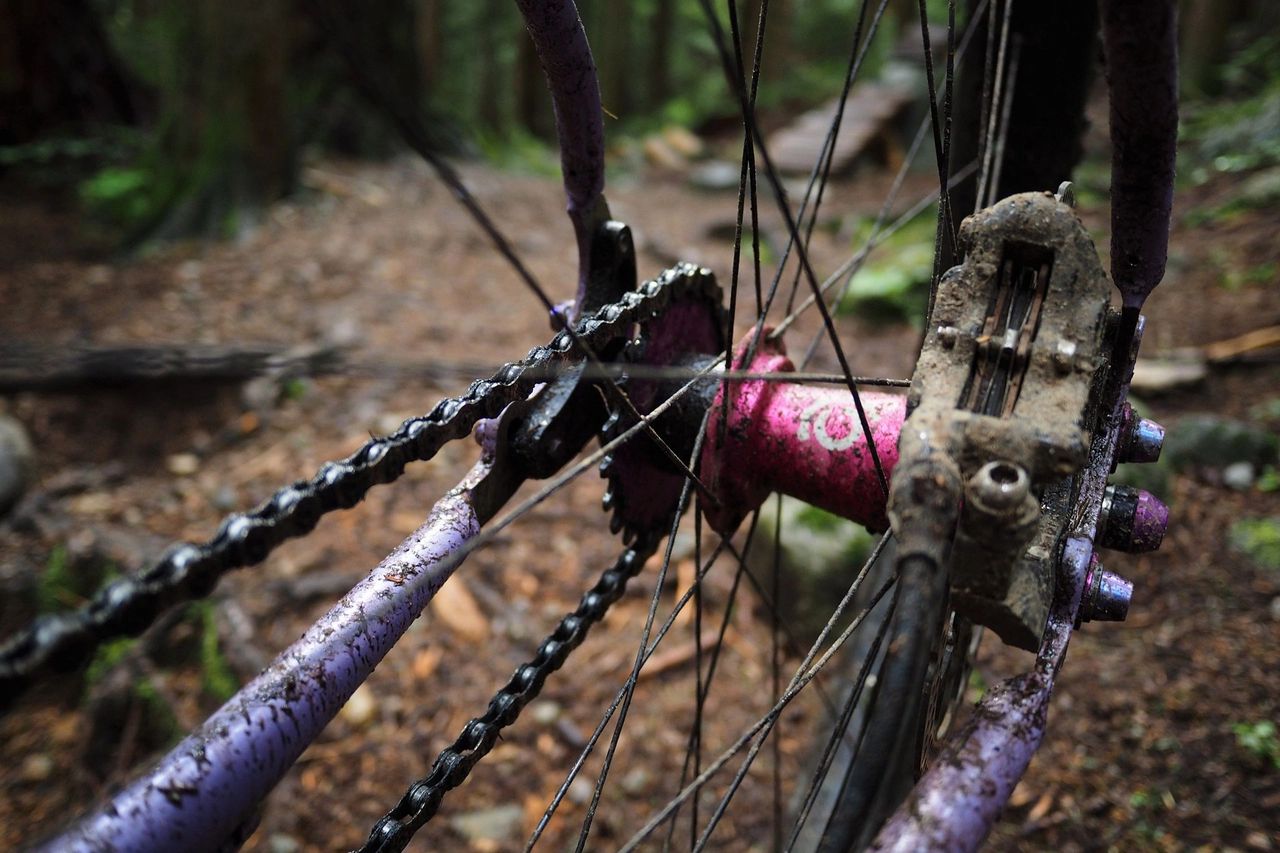
For many years now, my friend James has been teasing me that single-speeding will kill my knees. In his defense, for some of those years, I was pushing silly gearing for mountain biking on the North Shore, but that hasn’t been the case for a while now. Actually, in addition to sensible gearing, my favourite thing about single-speeding a mullet the last couple weeks is just how much easier it is to accelerate the rear wheel back up to speed on speed technical climbs.
[Aside] For more on #1FG cog and ring selection, please check out Let Go Your Ego. [/Aside]
That said, I have been having some knee pain lately riding. Much of which I put down to bike fit, specifically on multi-speed bikes with very steep effective seat tube angles. Until climbs get properly grunty I just can’t make very steep seat tube angles work for me in terms of creating power. I don’t think I’m alone, and consciously or subconsciously, and this is the total sum of what I’m going to write on the subject, I think a big part of the trend of folks seeking out shorter and shorter crank arms is trying to compensate for steeper and steeper seat tube lengths. Especially folks that aren’t pedaling straight up hills to ride back down.
There are certainly ways to adjust geometry – mullet rear wheels on a 29’er, over-forking, sliding saddles backward, and I keep harassing more companies to offer dropper posts with setbacks, but some frames are so steep now that I can’t really adapt the bikes to fit me well with the options I currently have.

Before I go any further, yes I’ve been talking to my physio about what I’m experiencing and yes I’m doing some exercises to help with it, and I’m also working on bike fit and muscle training solutions to make steeper STA bikes work better for me.
My drive today is not about why my knees are hurting riding a multi-speed bike, and how I’m dealing with it, but rather discussion of why they don’t hurt when I ride my single-speed. Despite it being fully rigid and requiring me to stand on the pedals regularly on the climbs, never mind while descending. I’ve been thinking that the reason they don’t hurt in that application, in addition to good body position and a judicious choice of gearing, is the Hydra-effect.
Industry Nine’s Hydra hub is designed to use flex in the system to better support the freehub driver and engage more pawls into the drive ring, under harder loads and that’s what my body is doing when I’m heading up a steep pitch in or out of the saddle on my #1FG bike.
[Aside] For a teardown and further explanation of the Hydra hub system please check out my Industry Nine Hydra review on NSMB.com. [/Aside]

As with the Hydra drive mechanism, the harder I’m pushing on the pedals the more my body is engaged, especially standing up steep pitches where my core, arms, shoulders, back, etc. are all taught and contributing to turning the pedals over. I’ve been playing with it back-to-back on the same climbs and consistently while I feel more generally beaten at the top on the one speed, my knees feel significantly fresher.
I already ride my multi-speed bikes out of the saddle uphill more than most folks I know, but it’s something I’m focussing on more keenly now. Especially taking regular brakes to grab a couple gears harder, rise up, pedal a bit, then dump the derailleur into an easier gear and sit again. Using variety to keep everything turning.
Early results are still more discomfort on multi-speed bikes, and more discomfort the steeper the effective seat angle position is, but I do think it’s getting better. Either way, an ongoing project I’ll continue to ruminate on. If nothing else, it’s food for thought for anyone who has found that increased knee discomfort has arrived with a new more modernly geometrized rig. You’re far from alone out there.