
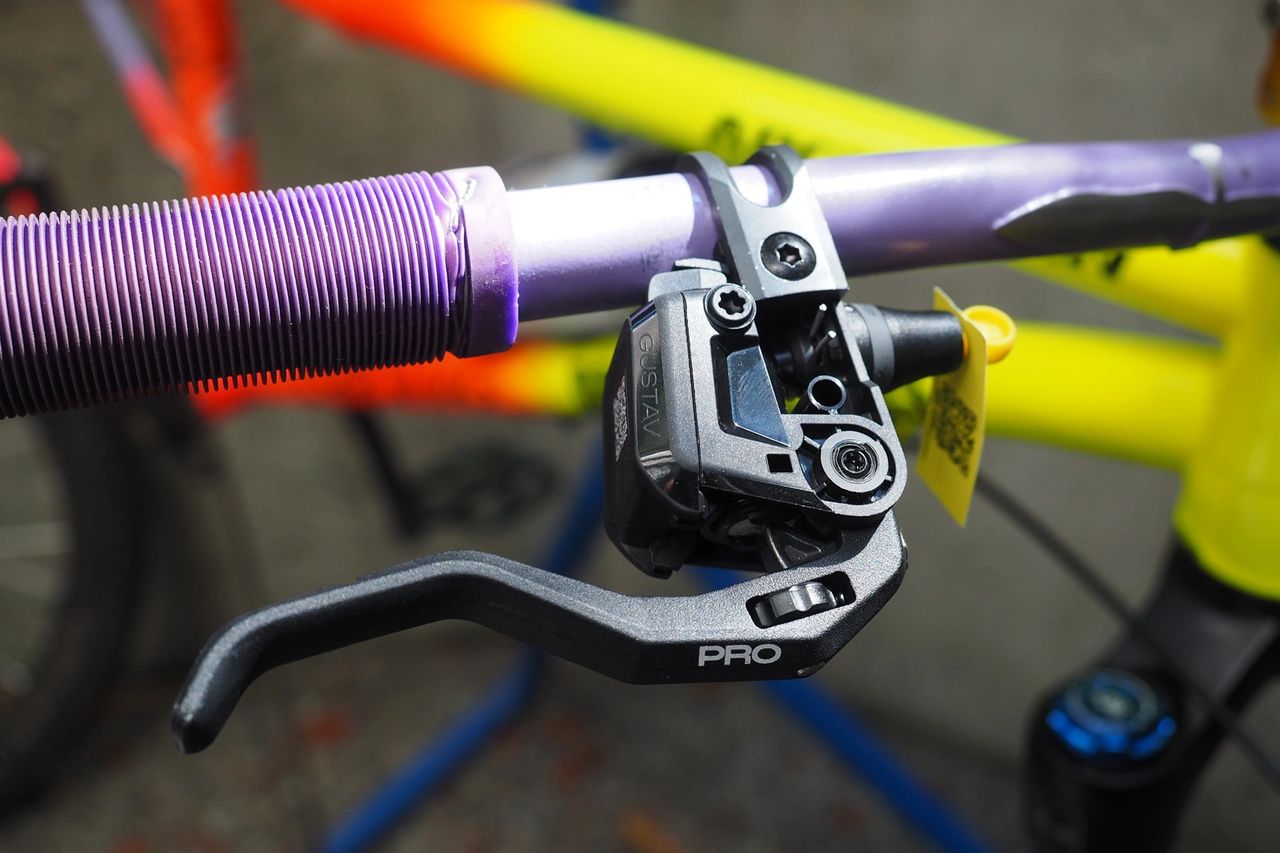
A few Shore rides, our family Cumberlandworx trip, and back at it this week, I’m enjoying Magura’s biggest, baddest, heaviest, rotor-clapping-powerful-est, and most gentle braking system. That said, this being far, far, away from the first piece on the pedal-wide-web about Magura’s freshest Gustav Pro brake system, I’m going to cruise right into a couple of key talking points, bullet style, and then drop more of an introduction.
- Brake Bleeds: No proprietary fittings required, the cleanest and simplest bleed on the market. Take tools you already own, add some Magura Blood brake fluid, and two cheap 30cc slip-tip medical syringes. The biggest challenge with the latter is {almost} everyone, but Magura, wants to sell you 200x of the things.
- Friction vs. Power: Gustav brakes deliver an incredible amount of pressure from pistons to pads to rotors. But the light, positive, lever action, and life-over-friction pad material deliver it in a wonderfully progressive, controllable, even gentle way. I’ll get into it more below, but a higher-friction tire-barking pad option is also on the way if that’s your sure preference.
- Massive 2.5mm Rotor Option: Along with the double-thick pads, Gustav brakes also have the option of massively thick 2.5mm rotors. While these will certainly help with heat management in some applications, a key reason for the thicker rotors is enhanced service life on big e-cargo commuter bikes. I’m running a 180×2.5mm rotor rear and a 203×2.0mm rotor front, and will talk more about that below.
- Lever Reach: One concern I’ve read about the Gustav is that the lever blade sits and engages too far from the bar for small hands and mountain bike applications. Lever reach, dialed almost fully inboard, is perfect for me, but those running smaller than a medium glove will likely prefer an MT5/7 with an HC lever blade, or to wait for Magura to release a similar option for the Gustav.


Gustav, Louise, Marta, Julie, & Clara
In addition to spending much of the last decade riding Magura’s MT7, MT Trail, MT Trail Sport, and MT5 braking systems, over many years, I’ve owned multiple iterations of brakes called Gustav, Louise, and Marta SL*. I’m also in tight with enough other folks who can say the same, so I feel a certain heightened academic authority when I say that I’m stoked about a return to the old names.
To me, if this new Gustav Pro brake was the MT9, or MT11, it wouldn’t have quite the same allure. The old Gustav name makes me think of images of hardcore riders truck shuttling the steep cliffs of Williams Lake twenty-plus years ago. It’s a beastly first entry into the next generation of Magura stoppers, and it just makes sense that Gustav leads the charge.
*{Plus, some shorter Julie levers I ran on my last front-only Gustav paired with an ’07 Louise out back}.

The new primary cylinder bodies are still relying on Magura’s Carbotecture construction. But, they’ve ditched the simple coarse-thread clamp system in favour of a new aluminum hinge clamp and a fine-thread screw that is captured entirely in said clamp. I have two thumbs up for the new clamping system and will not miss debating with folks around their ‘wood screw’ ignorance regarding the optimal interface for the past generation of anchoring.
As for Carbotecture itself, I’ve written plenty in the past regarding Magura’s materials experience, motorcycle clutch bodies, and so on, and I’m going to skip over debating internet issues here. I’ve owned, ridden, and worked on a lot of Magura brakes, and from their magnetic brake pads to the new bleeding setup, feel at the lever, raw power to weight ratios, and yes, with materials, they’re always innovating.
As with every other braking system, Magura and otherwise, chez MEATengines, I’m running the levers loose enough to rotate in a crash. They’ve already seen a couple of good ones.

The brake calipers carry forward Magura’s focus on one-piece designs. Ah, I don’t know, “one-piece design” doesn’t really cover the violence of it all. Like the MT calipers, the Gustav is forged in a 1000-ton press. As with the MT brakes, the architecture and four-independent-pad design is borrowed from their experience making motorcycle brakes.
This seems a good point to mention Magura’s 5-Year leak-proof guarantee on their primary cylinders, calipers. This is to the original owner, OE, or aftermarket. As with other brands with solid customer service reputations, I always recommend that folks reach out to Magura, with full honesty and reasonable expectations, even when something is clearly not covered. In particular, I’ve seen some egregious home-mechanicing covered by a very generous ‘crash replacement’.


Blade Swaps
I’m going to jump in here with a quick and super-easy win. No more hammer and punch, now one screw is all it takes to swap Magura brake lever cartridges. This is exciting both from a perspective of changing lever blades after a bad crash, but also swapping in a different lever shape once Magura is manufacturing some options*.
If you’re wondering, the reason the first-generation Gustav has limited inboard lever adjustment isn’t an homage to systems past, but rather down to its compatibility with ABS system standards. I would be surprised if we don’t see a smaller-hand-closer-to-bar-friendly HC option very soon, since that’s one place, along with light lever action, where Magura really serves riders.
*{Maybe some carbon lever blades for us all-year-round riders who suffer from circulation issues in the wet-cold-wet-cold?!?!}


Easy Link – Current & Future
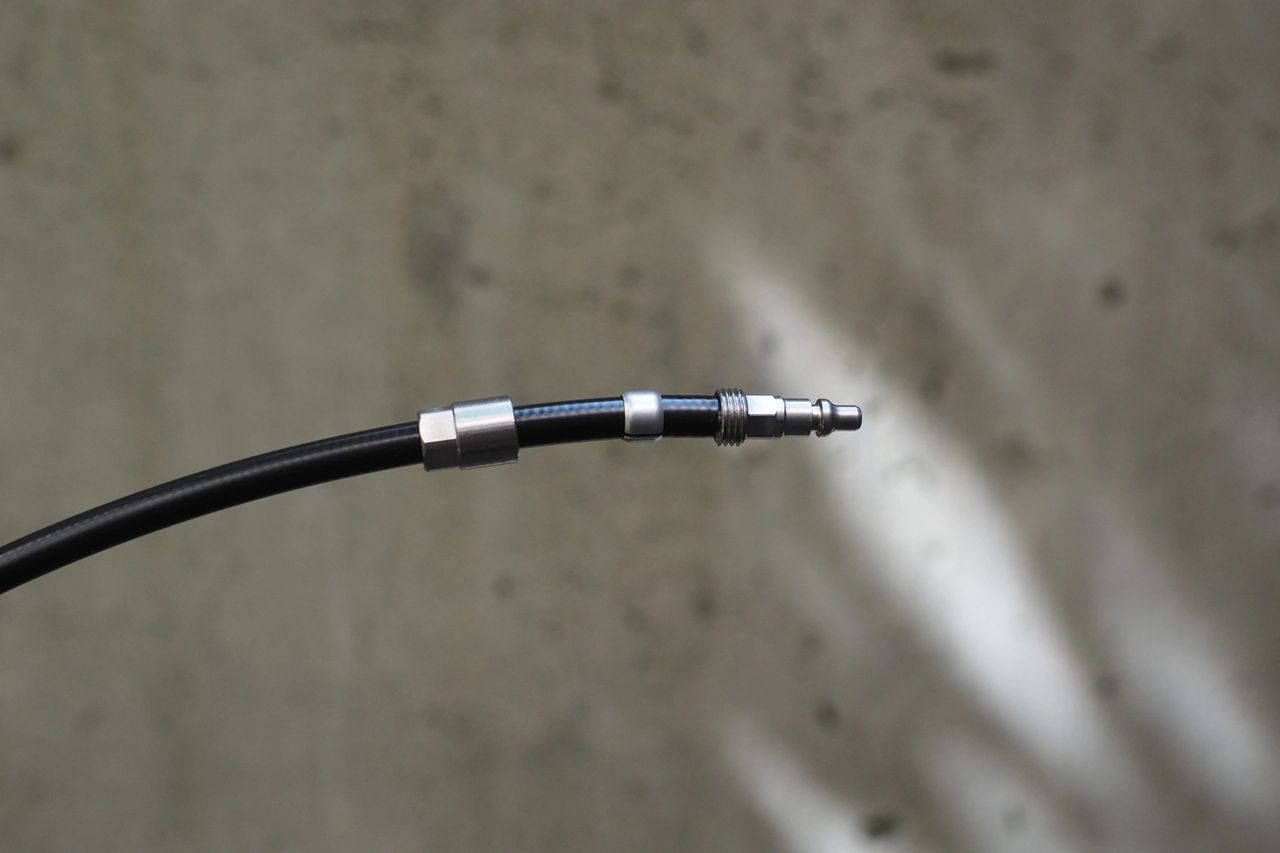
Moving forward, Magura is doing brake fittings differently from everyone else with their fuel-line-esque Easy Link brake line setup. These fittings clip into the primary cylinder instead of threading in. The most obvious benefit is that, with a crimped fitting assembly, one doesn’t have to trim their brake line to remove or install it on an internally routed frame.
True, most people and shops will not have a fitting crimper on hand, but Magura will manage this in the near future by giving riders the factory option to leave the stock, crimped, lever fitting intact, and instead shorten their line at the caliper end.


[Aside]
This is, of course, all academic on my end as both my Chromag ArctuHawk Voyager and my Banshee Freeride BMX were designed by folks who don’t dislike bike mechanics – home and otherwise – and, therefore, have external brake routing. No dirt-filled tube-in-tube routing that requires penetrant and two pairs of Popeye forearms to pull housing out. No fresh front triangles required due to collapsed internal cable guide architecture. No in-frame blind fishing expeditions. No brake bleeds to swap headset bearings.
Actually, chez MEATengines, we don’t have a single bicycle with internal cable routing these days. Even our dropper posts all exit at the bottom of the seat tube, and we’re quite happy to keep it that way.
Here, as an aside to an aside, I’ll shout out the latest addition to Chromag’s sag-wagon lineup, the fresh Reazon, which not only keeps all its cables on the outside, but comes in lilac* to boot. Thanks to all my ‘friends’ who sent me a link to this bike. You’re right, it does come in a 5’9″ friendly M/L size, and with a 27″ rear wheel, it would most likely clear a massive Plus tire. [S] I really appreciate the temptation. [/S]
Anywho, even with no bikes that benefit from not needing new fittings every time a brake is swapped, and even with my penchant for ain’t-broke-don’t-fix Ludditehood, I have to admit that the Easy Link system is nifty.
*{“Aurora”}
[/Aside]

Big Bleeds & Fast Bleeds
{Nb: I wrote more about bleeding the Gustav brakes in SBTISAOAF for July 25th.}
Two of my all-time favourite bike shop characters are ‘Bikeroom’ Jeffrey Bryson and ‘Nice Guy’ Geoff MacDonald. And I bring up Jeff & Geoff here because, like all proper characters, they both have catch phrases, and theirs can be directly relevant to any brake bleeding process.
In reference to the fact that there always seems to be one more bubble in any brake or hand-bled fork damper, Jeff likes to say “bubbles are dicks.” And, when confronted with any ‘Just a…’ job that goes sideways, Geoff likes to say, “Is bike mechanics hard?”
Shimano, SRAM, Formula, Hayes, Hope, TRP, Magura, etc., pick a brake system and don’t be a dick about it. All the top-end four-piston DH brakes are WC DH & Enduro worthy. But if I had to pick a top podium spot for easy and consistent bleedability, the new Magura setup scores the top step.
Step 1: The no special fitting, lock-off, slip-tip syringe push-through from the caliper is clean, consistent, and quick. Just be sure the caliper is at the low point and the primary cylinder is at the high point, and push.
Step 2: Cycle the ‘holey’ syringe at the primary cylinder to burp out any of those dickish bubbles that choose to stay behind.


The Gustav caliper is massive, but whether it’s down to the fluid path or the bleed port position, it doesn’t seem to be prone to trapping air bubbles, which does happen irregularly with the MT 4-piston forgings. Big calipers, one-piece and two-piece, all vary in this regard, but there’s a reason Hayes has two separate ports on their Dominion calipers, and a couple of other brands could certainly consider doing the same. Early days, yes, but I think Magura is good-to-go with the single entry.
One final bleed note. For the love of your bank account, sanity, time, etc., please, please, please, remove your pads before you bleed your brakes and, by removing the wheel or removing the caliper from your frame, create some distance between any fluid and your rotor. I have seen way too many fully self-contaminated brake setups this summer.
Oh, final-final note, and this goes just as hard for Shimano and TRP and etc., the bleed plug in your primary cylinder is N.O.T. {not} structural. It’s just a plug. Be gentle. I’ve seen so many rounded-out Shimano plugs in the last two years from folks torquing the 2mm or 2.5mm hex heads like they’re cranksets, and when they’re that tight, they are not fun to remove.
In the case of Magura, the fact that the plug is plastic should be a red flag to park the hamfistedness, but you give some folks a T-25 Torx key and they’re going to treat everything like a rotor bolt.

Mixed Rotor Logic
Okay, if you’re Gustav curious but not a full-on bike nerd, just whisper something mean about Cooper Quinn under your breath and then scroll down to the next section, ‘Brake Pads,’ and save yourself from some pseudo-scientific claptrap.
Magura’s Gustav brakes have the piston travel and fluid capacity to manage either 2.5mm or 2.0mm rotors all the way to worn-out {pads and rotors}. The obvious advantage of the 2.5mm rotor is a longer service life, and the obvious advantage of the 2.0mm rotor is a lighter weight, and because Cooper apparently lives rent-free in my brain, neither of those truths is a factor in my mixed-rotor setup.
Here I’m thinking about heat. Specifically, too much heat is bad for brake performance, and not enough heat is also bad for brake performance. Despite what some bike brake marketing copy will tell you, heat regulation is much more important than heat dissipation. Weight aside, think massive calipers over finned brake pads.


I have turned more than a few rotors blue on the back of my hardtail, but I don’t like stepping up the rotor size past 180mm. First off, I still ride elevated wood features, and I end up spending way more time straightening larger rotors out back. Also, brake balance is about as relevant as suspension balance when it comes to life on the long-forked diamond frame.
Here, then, the thicker rotor, as opposed to running a larger diameter, makes perfect sense, particularly for a hardtail, but also for any heavier rider discolouring rear discs who doesn’t have any desire for more braking power out back.
On the other hand, water-cooled much of the year, up front, I’m not finding I have any heat management issues with Dominion, Cura4, Saint, Code, or MT four-piston setups, so combined with the massive Gustav caliper, I can’t imagine a reason I’d need a thicker rotor than the 2.0mm.
In fact, thank you, Cooper, going with a thicker rotor may result in a decrease in braking performance, especially in the slower, steeper, jankier terrain I prefer.


I will note that setting up the Gustav brakes with the thinner rotor was a little trickier to do. The pistons need to travel further, and with the four independent pads, and just how smooth Magura pistons move, it can take a bit of time to have everything pushing evenly.
My Hayes FEEL’R Gauge is a go-to tool on any of these systems – Hayes, Formula, Magura, etc. – where the pads sit close to the rotors rather than relying on some kind of cam or hydraulic magic to cover some massive OE-friendly initial gap.
My previous FEEL’R Gauge went walkabout {Read: I can’t remember who I loaned it to. If you borrowed my FEEL’R Gauge please return it!} and I quickly bucked-up the CA$20 to buy another one because it’s so handy.

Brake Pads
They’re thick, so thick, with the pistons and fluid reservoir to make all that material usable. The stock pads are also made from a longer-lasting material, rather than a higher-friction material, in a nod to their dual role as Magura’s biggest DH stoppers and their full-on e-cargo machine brakes.
At Eurobike this year, Magura announced that there will be two levels of performance pads coming for the Gustav, a ‘Silver’ pad that boosts friction by about 15% and and a ‘Gold’ option that’s a jump up from there. I have a set of the Silver pads on hand and expect to have a mano-a-mano pad-related update together in very early September.
The current ‘gentle power’ setup is perfect for the rear of my hardtail. I have zero trouble locking up the back wheel, so my plan is to min-max pad life and friction by trying them up front first. There’s a chance the braking balance will actually be off, especially as I’m running a smaller 180mm rotor out back, but finding out is half the fun, n’est-ce pas?


Shiftmix G.2
MatchMaker, Peacemaker, Mixmaster, I-Spec A, B, 2, EV. There are a lot of different ideas on integrating shifters, dropper post levers, and brake levers. And, of course, aftermarket companies like Wolf Tooth Components and their ShiftMounts, which have as many options for going back to individual component mounting as they do for mating controls together.
Magura’s second-generation Shiftmix system looks pretty awesome and is probably future-proof. Though now that I’ve written that, oof. Anywho, the mounts slide cleanly into an underside channel in Gustav’s hinged clamp and are locked in place, so, for example, every time Shimano updates I-Spec, all Magura needs to do is create a new bracket to slide in.

First Impressions – On The Shore
‘Gentle’ power, ‘gentle’ power, ‘gentle’ power, I can {and will} wax all day about how the vast, vast, majority of riders would be better served by how the Gustav delivers braking than by systems delivering full-friction along with massive rotor-clapping at first contact.
This is the braking equivalent of Plus tires. A notably increased margin of error at the cost of maximum eye-watering high-G shredability that most of us simply do not take advantage of on our very best day. There is a ton of hydraulic pressure driving the Gustav pistons forward, and at the risk of offending this bro or that, I’d fully believe Magura has the most hydraulically-powerful brake on the market.
That said, even with the light lever action, there is certainly a recalibration of finger pressure coming down steep techy terrain compared to riding MTs with Race pads, Formula Cura4 2pc brakes with Sintered pads, or my Hayes Dominion stoppers with either metallic or semi-metallic braking.
That recalibration happened in the first 25 meters of Karen’s Boundary Trail, and braking from there was an intuitive no-drama affair, but it does make me think that shops and riders will have to temper their parking-lot expectations. If I were Magura, I would even consider adding a SKU and having a Magura Gustav Pro MTB {with Silver Performance pads} and Magura Gustav Pro Eeb {with these stock pads}. That way folks’ first impression is more full-on.
Yes, even though I think the majority of us mountain bikers would be better served with the gentler setup. Everyone thinks they’re a hardcore shredder right?


I did manage to bend my 180mm, 2.5mm-thick rear rotor, slipping my back wheel on Pipeline, and I will say they are a bit more of an event to straighten than the 2.0mm versions. For one, my rotor-truing tool doesn’t fit! With my trusty Knipex parallel pliers in hand, I did manage to mostly square it all up again.
My wheels spin nicely, but for the record, there is a little shook-shook-shook noise in the work stand. NJP, The Clairebarian*, and I. All of our rotors are a bit bent or warped all the time because of {gasp?} riding mountain bikes in the forest. If absolutely zero rotor-pad noise is a goal, then either park your rig permanently or buy brakes with pads that sit epically far from the rotors and accept the clappy action.
*{On The Clairebarian’s G2, as with any Code brakes I’m working on for friends, I cheat the pistons in which results in a much firmer full-power lever feel but does mean a tiny bit of pad-on-rotor contact when the discs aren’t straighter-than-new.}


First Impressions – Cumberlandworx
I really appreciated the ‘gentle’ power of the stock pad setup on my first Cumberlandworx solo ride. I was tired, exhausted even*, when I dropped into Grub, Stub, and Pity The Fool, and I was well over my head for much of it.
Walking a few features, yes, I really enjoyed these trails on my rigid rig at Easter, so I figured I’d go back on the ArctuHawk Voyager and shred. So it’s a little dry and dusty? I have 3″ rubber on 29″ hoops, massive brakes, a 170mm travel mega-fork, and a super-slack head tube angle perfect for tackling steep lines.
To make a long story short, fresh or tired, I had no business being on those lines in the so-loose-and-so-dry conditions. I was full-on saved by my bike on multiple steep-steep sections and with ultra-limited traction, a couple of the features that I walked or slow-rolled down previously were only possible to navigate on my bike, moving.
Now, for the record I’m Andrew Major, the older, shorter, fatter, and much slower Matt Beer. I appreciated the range of brake control, in addition to the absolute stopping force, when I was deep in the sh*t panicking my way down single-track powder.
*{We’re on the cusp of it being too much to do a dad-lap in addition to a Clairebarian ride on the same day.}

Aside from the bitter, thankfully not bleeding, edge of my performance envelope, the Gustav brakes were all the way pleasant on every ride in Cumberland, as they have been on the North Shore. The question that will come up, which I’ll try to address in the future through this review process, is whether, for these uses, the added cost and mass compared to a pair of Magura’s excellent high-value MT5 brakes or premium MT7 brakes is worthwhile.
Or, taking a leap, what about all the advantages of the new Gustav lever assembly {add in HC and carbon blade options} but mated to the current MT 4-piston calipers with Performance pads out back and Race pads up front? Sure, I’d lose the 2.5mm rear rotor capacity, which I’m enjoying, and the massive boost in pad volume, which I think is great for the every-rider, but these are the trade-offs.

Final First Feelings
Okay, they’re obviously not for everyone. Small hands, carbon-lever-mandatory, weight-conscious DH/Enduro/Shore-to-Sky riders are probably going to pass on the Gustav in favour of another brake, for now, such as Magura’s MT7/5/Trail lineup. Same story for riders who want that instant-on high-friction tire barking.
Again, for now, but with more lever blade options undoubtedly coming, and higher-friction pad compounds confirmed, it’s really only weight that becomes a factor. And most folks in one of the markets that the Gustav is meant to serve probably don’t care. Especially running 2.0mm rotors.
I’m certain that the most interesting features of Gustav – Easy Link, the hinged-clamp & Shiftmix G.2, higher reservoir volume – will arrive on future next-generation, lower weight, lower hydraulic-power, Magura brakes as well.

I’ll include one more thought, though I haven’t tested it out myself. As I mentioned above, there are a lot of great options for high-performance full-on mountain bike brakes, and while there is quite a range in terms of feel, aside from personal preference, you can’t really go wrong. But, if you’re cargo-biking, eebed up or MEAT-powered, anywhere with hills, based on my separate experiences, this is the brake system.
Where does that leave us today? I’ll be back soonish with an update once I have some hours on the new Performance pads, and we’ll go from there on a long, long-term review process. As always, if you have any questions in the interim, feel encouraged to drop me an e-mail.
Welcome to MEATengines, I hope you enjoyed this piece. If you did, please consider buying me a coffee. Any questions, concerns, or comments; feel encouraged to drop me an e-mail, or join us at r/MEATengines.