
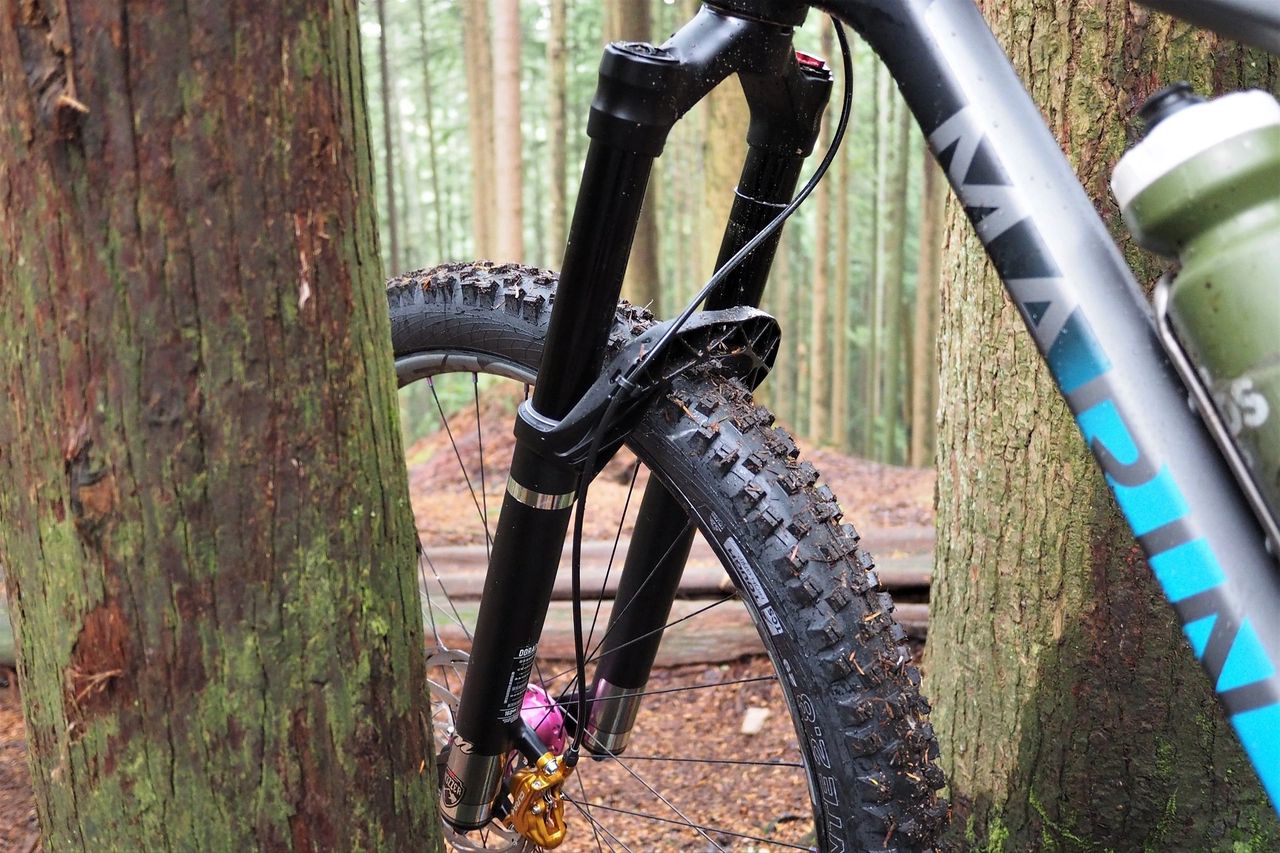
{Housekeeping: This was written, largely in one sitting, as a response to Mike Ferrentino’s “A Death Foretold” on NSMB.com. For the TL;DR folks, I’ll note that the ‘your’ in the title refers to mountain bikers in general, not to Mr. Ferrentino in particular. – Andrew}
Friendly Ferrentino
Oh, hello there. Please, come in, come in. Have a seat, wherever you like. I have some news for you, it may be hard to take. Are you comfortable? Can I grab you some water? Maybe we could get a loved one on the line for emotional support? Listen, I don’t want you to think that I’m throwing my colleague Mike under the bus here, it’s just that, he’s a really nice guy and he didn’t want to hurt your feelings. Unfortunately, I think, because of that, we may have a little bit of a misunderstanding when it comes to Plus-sized tires.
There’s really no easy way to say this, but put as gently as I can, you’re simply not Seb Kemp. Sorry. It’s just that Seb Kemp can ride circles around you doing one-handed uphill wheelies on a 30% grade whilst singing sea shanties as if they’d never gone out of style. Never once breaking eye contact. Seb Kemp can turn a 30-foot straight drop into calmly rollable single track by hitting a series of sniper catch roots which would be Vaseline-slick to the rest of us but actually excrete sticky sap just before his tires touch them. Every time. And, well, chances are that you cannot.
So when Mr. Ferrentino quotes Seb talking about how, one example of, a Plus bike felt “sluggish,” and “cumbersome,” and “tiring to change direction” I think that requires a certain level of context. Take me as an example. There are janky double black trails where my mind is screaming ‘STAY LOOSE, STAY LOOSE, STAY LOOSE’ as I do my absolute best not to eat shit and on the same sports surface Seb would be seeking more playful line options. No, in his piece A Death Foretold, Mike kindly neglects to remind you that in comparing viewpoints and abilities, it is much more likely that, I’m sorry to say, you are more of an Andrew Major than a Seb. And, if you ride janky trails with my limited skillset, then Plus tires were absolutely made for you.


Pivoting To Plus
When Plus tires first arrived on the scene my gut reaction was to dismiss them out of hand as well. Tires with adequate sidewall support, durability, and traction were heavy enough in a 2.5″ size not to mention the weight difference between a durable-enough i26-i30 rim compared to running an i40 or larger. My mind was immediately more open after talking to Pivot’s Chris Cocalis about closed-minded mountain bikers, and in particular magazine editors, and his fresh rig, the Switchblade V1, in 2016.
The Switchblade was one of the first bikes built around running 29″ wheels or 27+ wheels while maintaining relatively consistent geometry through the use of increased fork travel or a 17mm extended lower headset cup. Comparing static geometry between the two setups there were some slight differences – it was about 0.75° of difference in the head tube angle (HTA) and seat tube angle (STA) between the two options and the Plus bike’s BB sits a few millimeters lower – but in terms of an apples-to-apples comparison this was the perfect platform. In part because it was sold with both setups, and in part because of Chris’ experiences testing both setups back and forth.
Here I don’t mean Chris’ personal riding experiences, though he had much to say about his own AB testing, but rather the repeated experience of running demo days where most riders would reach for the 29″ versions first, and most riders would leave preferring to ride Plus tires. You see, Plus sizing was unfortunately tied to riders’ egos from day one. We were told that they provided a significantly improved margin of error for intermediate riders in technical situations, but couldn’t be carved as hard by riders and racers with truly advanced skillsets. Buying a Plus bike was, therefore, directly akin to admitting one wasn’t on the spear tip of guts and ability.


I’m careful here to point out that this conversation was from 2016 and I absolutely allow that people’s opinions should change over time when presented with new experiences and evidence, so I would absolutely not hold him, or anyone else, to what they believed about bicycle design six or seven model-years ago. The reason the exchange was so memorable to me though is the twinkle in Mr. Cocalis’ eyes when he saw my media badge. You see, mountain bike editors weren’t immune to this level of self-aggrandizement either. Like everyone else, some 80% of them arrived firmly in the 29er camp, and about that same number left with awesome things to say about 27+.
I’m fully aware, and confident in, my intermediate mountain biking abilities and my fairly cautious assessment of risk and I balance that against love for old-school janky mountain bike trails. I remember thinking that if the bigger tires are that notable on a 5″ travel full suspension platform imagine how great it will be on my hardtail? And, if 27+ is awesome imagine how much I’m going to love 29+. In the Spring of 2017, I was on the new aluminum Chameleon with 27×2.8″ rubber and then a Trek Stache running 29×3″. I didn’t love the Rekons or the Chupacabras (now XR2) for local riding but the potential was there. By summer I was running Plus tires on my mullet hardtail and experimenting with rim widths. By the following Fall, I was squeezing Plus rubber in the front of every bike I was riding, hardtails and full-suspension rigs. Put simply, that extra margin of error makes mountain bike riding more fun for me.


Stache This
Back to Mike’s piece, I think that the Super6 Fattie, in its stock guise, was a bullshit example of a Plus bike. Unfortunately, it’s one of the first ones many folks saw, rode, or read about. As Dave noted in 2016, it had very wide (3″) tires with on relatively skinny rims. I’ll add that the sidewalls on those Ground Control rubber were about as supportive, and durable, as plastic wrap. I’ve chewed lettuce that was tougher. One key problem here was companies trying to keep the big balloons as light as possible and to not turn off the gram counters. Put some i40 rims and proper knobby tires with proper beefy sidewalls on that beauty and it goes.
Even aside from tire and rim options, bike manufacturers came up against the issue of wedging Plus rubber into the day’s trend of as-short-as-possible chain stays. The Stache, which I think rode best with the dropouts set full long anyway, with its funky elevated chainstay design is a prime example of this challenge but there was plenty of grumbling about trying to cram 27×2.8/3.0″ rubber into non-hardtails as well and I think this is the real reason that the 2.6″ tire size has become so popular. It’s easy to fit, but it sounds almost as big as a 2.8″.
I had so much fun riding the Stache once I upgraded the tires to something with knobs and semi-sticky rubber. Yes, I wished that chainstays were longer and that the headtube angle was slacker and that’s informed my preferences for mountain bikes since, including my custom Waltworks frames. Yes, I wish Trek had continued to manufacturer and revise the most interesting bike they’ve ever made. It’s interesting to me that it’s a bike, geometry niggles aside, that was very much enjoyed by everyone I know who tried one and at the same time universally repulsed so many riders I talked to about it.


I remember during my review period riding in Kamloops and thinking that as much as the terrain was completely different to my usual Fromme and Seymour rides the Stache was still a joy to ride. From greasy and steep rock armoured trails with a heavy emphasis on brake control to fast and loose trails with a heavy emphasis on weighting the tires I was having a blast. It’s the only other time I happened upon another Stache rider while I was riding the Stache and his stoke was equally obvious.
Yet despite how pumped I was on the Stache, and have been on Plus tires in general for years, there’s only one other rider I regularly pedal bikes with who runs big rubber and, like me, he’s generally combining an aggressive 29×2.8-3.0″ tire, a CushCore Plus insert, and a rigid fork together. Even friends who pedaled my Marin Alpine Trail, Kona Honzo, and Banshee Titan with a front 2.8″ and raved about braking traction, control, and margin of error have never made the switch themselves. My wife’s hardtail is setup with 27×2.8″ rubber and she loves it but I’d bet there’s not a rider she’s been out with that won’t buy a full suspension rig with a 2.5″ rubber- 27″, mullet, or 29″ – for their next mountain bike.
To be fair, as Mike noted the 27+ size is essentially dead in terms of complete production mountain bike options. But there are enough riders who spec bikes from the frame up, and there are enough tire and rim options available, that there’s really no barrier to running Plus tires on a custom build. In fact, while sadly 26+ never caught on it’s really not fair to say that Plus tires are dying. The 29×2.8″ WTB Vigilante’s that I love have received a stay of execution, and I just refreshed my wife’s 27×2.8″ Specialized Butchers. If you really want a killer North Shore Plus tire, Schwalbe has stock in the 27×2.8″ Magic Mary in their soft compound, though I’d pair that with the faster-rolling 27×2.8″ Big Betty in the back. I’d put any of those tires on an i40 rim, which also works great with your 2.6″ tire of choice if you prefer something a little smaller in the back.


Margins Of Error
Magic Mary, Butcher, Vigilante, Bontrager SE4, there are, or were, some legitimately great Plus tires on the market that balance sidewall strength and support with rolling weight. Then I ruin all those calculations by cramming the biggest CushCore inserts that will fit into my rubber anyways. Rolling weight is always the first excuse I hear from folks at to why they are, or were, disinterested in Plus bikes. Yes, there’s a good reason Nino Schurter would never consider 2.8″ tires, they aren’t race light. There’s also a reason, beyond mad skills and focus on his bike, that Jesse Melamed would never consider them for the EWS circuit, his 2.5″ DH tires with CushCore inserts already add up 1700 grams per wheel.
Never mind the fact that you, probably, aren’t either of those guys either, combine your new Plus-tire setup with knocking one minute of talking-sh*t out of every water break you take on a ride and you’ll be getting to the top of every hill faster with your new rubber, if that really matters. Meanwhile, yes, with tire pressure in the right zone, the extra margin of error on greasy rooted descents, slippery rockfaces, and slightly-emerald wood work will be divine. Not living in a rain forest? The extra noise-cancelling comfort on unforgiving rocky descents and general traction when it’s loose and dusty are amazing on hardtails and noticeable on full suspension bikes.


Trail riding. I agree that at a certain level of rider focus and ability, or tire durability within a maximum weight envelope, or lightest weight within a minimum grip envelope, the bigger volume tires present diminishing returns. But at what level of rider is where we may disagree. It’s certainly a point of contention between me and friends who may be better riders but who I know would love Plus tires if they gave them a chance. Again, referencing conversations that may not reflect currently held opinions, especially now that stock Plus bikes don’t readily exist, one of the best riders I know who was fully on the Plus program is James Wilson who owns Obsession: Bikes.
James can smoke me, and most fit riders half his age, up local mountain bike climbs whether they’re steep gravel suffer fests or gnarly single track climbs. And, he was riding the same 27+ trail bike that he was pumping up those climbs down plenty of steep, janky, descents as well. I drop his name because there’s not a single friend I’ve had the Plus conversation with that could drop him in both directions and very few who could drop him in either. I had a couple of great, memorable, chats with James about tire profiles, why so many Plus tires suck, and how 27+ bikes were the ideal full suspension machines for the majority of riders in Shore-to-Sky corridor and beyond. And also why so few shop employees, bike company employees, and riders were willing to give them an honest try.
In my own experience, I’d prefer a mullet with 27+ in the back and 29+ in the front, but I feel like for the purpose of this conversation there’s really no point in differentiating the two, or eliminating 26+ from the conversation for that matter. Whatever the diameter, wider rims and wider good rubber would deliver a better mountain bike experience for the majority of riders. I’d guess that most the industry folks I know who were pro-Plus haven’t changed their opinions either – I note the brand new Switchblade only ships as a 29er but 27+ compatibility is clearly noted – but at the same time given the lack of production examples of Plus bikes I didn’t see any point in putting them on the spot.

We Stooges
I have multiple biases that drive me to write about Plus tires. I know, shocking, it’s not just my altruistic nature reminding you to keep an open mind because I think, for many sport surfaces, it could really improve your on trail experience. I ride Plus tires, and I think they’re awesome. If I was building a new full suspension bike tomorrow for my local trails it would have a 27×2.8″ rear tire and a 29×2.8″ front tire. On my hardtail I’ve been running 29×2.6″ rear with a 29×2.8″ front but if the right 2.8″ rear was available I’d run that in a heartbeat. More volume, more better, assuming you can get the right tread and compound for your application.
In addition to my preference for big rubber on all my bikes, I regularly go as far as to say riding a rigid mountain bike on the North Shore trails that I want to is plausible because of Plus tires. At least combined with my skillset, the added comfort, traction, and margin of error make it genuinely fun to have no squish at all. If Plus tires did die out I’d still have fun riding full suspension and hardtail rigs with 2.6″ rubber, but I don’t know if I could pull off rigid ripping. I had this conversation a couple months ago with Andrew from Stooge Cycles – purveyors of modern-geo rigid-specific rigs – and he mentioned that it’s a real concern for him as well. To such an extent that he’s looking into making fat knobbies under his own brand name. That’s the sort of thing that really pisses me off about the bike industry. If Stooge can potentially make a buck selling Plus tires at the quantities they’d be buying, then Trek has no excuse to not keep making big, and good, SE4 rubber to support the thousands of Stache and Full Stache bikes they’ve sold.
For now I take solace in the fact that WTB has stayed the execution of my favourite Plus tire, the 29×2.8″ Vigilante in Light Casing / High Grip variety. Schwalbe is still supporting 27+ with excellent tires like the 2.8″ Big Betty and 2.8″ Magic Mary. Multiple rim manufacturers still make i40 rims. In my mind, as long as a passionate, if niche, demand exists for these products they’ll keep getting made. If not, it will be the egos of a vast number, a majority, even a large majority of riders who I think would have been better served by big rubber but never gave it a proper chance because it would have meant admitting they’re more Andrew Major than Andrew Neethling.