
Monday Musing (#41) – Right At Last
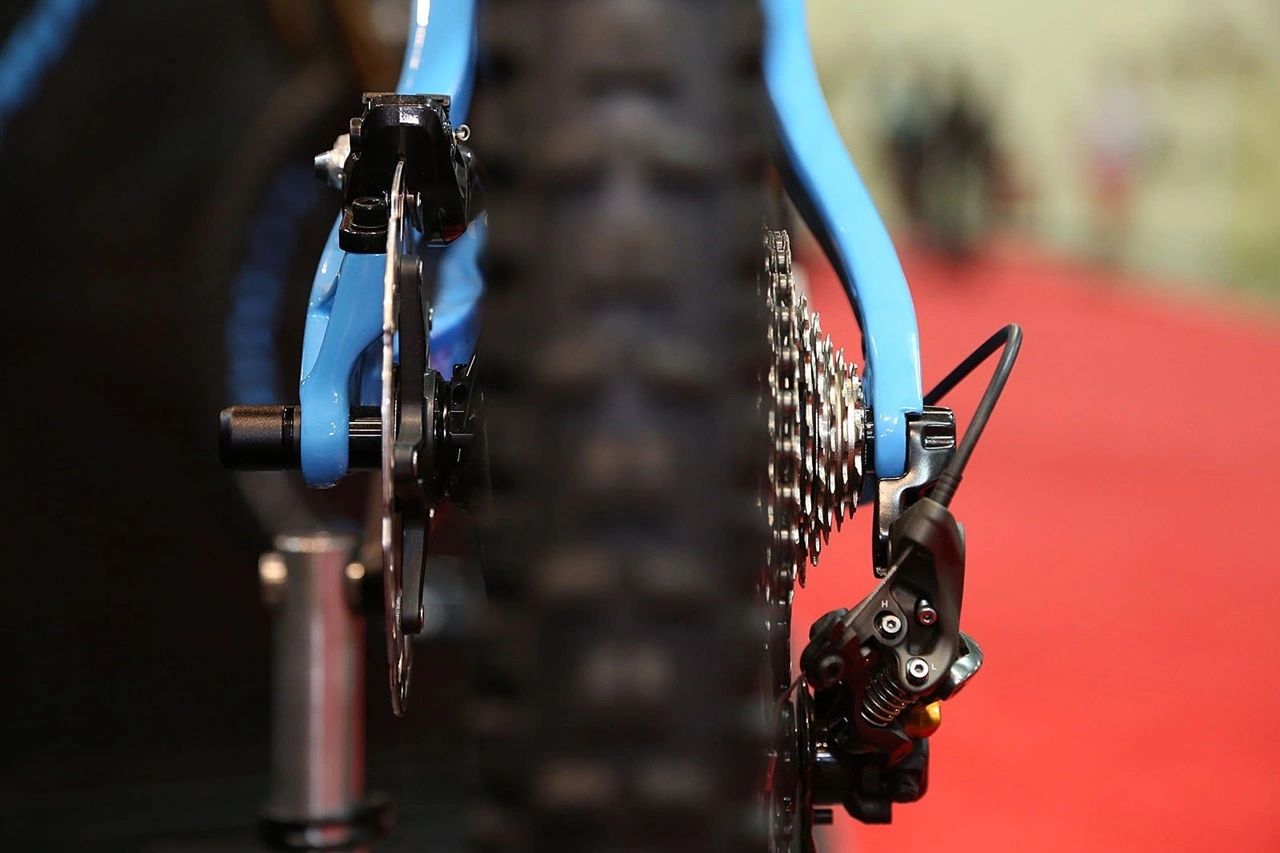
Every once in a while, a fellow rider will try to enginerd to me about how SB-157mm hub spacing builds a stiffer, stronger wheel than Boost-148mm hub spacing. And I’ll agree, I’ve seen the math. But, does it matter?
Every once in a while, a fellow rider will rant to me about how Boost-148mm shouldn’t even exist. If bike brands wanted wider hub flanges than 135/142mm could deliver, they could have, should have, used the existing 150/157mm hub spacing. And I’ll agree, I too would prefer fewer standards. But, now, given that the vast, vast majority of mountain bikes are now using 148mm spacing, does it matter?
Every once in a while, a reader will point out that I was wrong when I claimed that, due to the advent of 55mm chain lines, we were slowly being boiled into Super Boost, and I’ll smile. And I’ll admit it sure is taking longer than I expected. Those 55mm chainline / 148mm hub bikes deliver some really shitty chain angles. But the companies that are happy for the extra space for packaging and the drivetrain manufacturers selling chains, rings, and cassettes claim it doesn’t matter.

{Above photo: Fergs / NSMB.com}
But in the end, whether wheel strength and stiffness claims between 142mm, 148mm, and 157mm are simply academic or actually affect how bikes, and specifically 29″ wheeled bikes, ride, I’m more confident today than at any point that in the near future every mainstream trail bike sold will sport the wider hub standard. Yep, even as more DH rigs move to a narrower (Boost-148) rear end for trail clearance.
When Trek Bicycles pushed the bicycle world into 148x12mm rear hubs, built on claims of increased 29″ wheel stiffness, they didn’t just limit the new standard to the largest diameter hoops of the day. The logistics of specifying and marketing different hub spacings or spoke counts for different wheel sizes don’t offer enough performance differentiation to warrant the headache.
When Trek releases their first 32″ wheeled bikes, as soon as Fox, RockShox, or maybe Manitou, has a suspension fork ready to go, my prediction is that whatever rear hub they use will eventually permeate their entire performance mountain bicycle lineup.
After all, if XC racers clamoring for the bigger hoops are going to run SB-157 {AKA 157-Trail}, why wouldn’t the same hubs offer a wheel-building benefit on longer travel 27″ and 29’er bikes as well?


No longer borrowing from – heavy, expensive, basic: receive all three! – unicycle parts, with Maxxis & more making high-tolerance tires, multiple carbon rim options coming online, and quality spokes now available, dual-32″ for XC and gravel, and, most likely, 32fr/29rr mullets for light-trail are going to explode onto the sales scene. Followed, of course, by 36fr/32rr MX setups as well.
And, I’m certain, just like the first 29’ers, brands are going to go to 80s-roadie-steep head tube angles (HTAs) and recumbent-slack actual seat tube angles (ASTAs) in an attempt to keep wheelbases tucked-up tight. It will be a whole new geometry journey back to where XC-race & trail bikes are today.

Anywho, my next two personal bikes will use 142×12 and 135×10 rear hub spacing, but I’m not saving never to SB157 anymore. Two of the more interesting bikes I’ve ridden – Devinci Chainsaw & WR1 Arrival – use it as does the updated Knolly Endorphin {29/27 or 27/27}, one of the most compelling smaller-to-medium-rider one-bike sag wagons on the market.
If I were going to box-jump onto the 32″ band wagon, and I mean, if anything, the wheel size is made for rigid one-speeding, then I’d be making a compelling argument to myself about 157-Trail. That’s a lot of wheel. That’s a lot of spoke. And, I think it does matter.
Welcome to MEATengines, I hope you enjoyed this piece. If you did, please consider buying me a coffee. Any questions, concerns, or comments; feel encouraged to drop me an e-mail, or join us at r/MEATengines.